
More than straight front teeth
Crowding can make cleaning between teeth difficult, and some bite relationships concentrate contact on a few teeth. Clear aligners can address a range of spacing, crowding, and bite concerns. Planning includes the roots, gums, supporting bone, and how the upper and lower teeth meet. Some movements require a different orthodontic approach or additional treatment.
A sequence of small movements
Digital records are used to plan how teeth will move through a series of trays. Each aligner differs slightly from the previous one and applies controlled pressure to selected teeth. You move through the prescribed sequence while progress visits check the fit and tooth movement. The total time depends on the movements needed and how consistently the trays are worn.
Creating space and improving grip
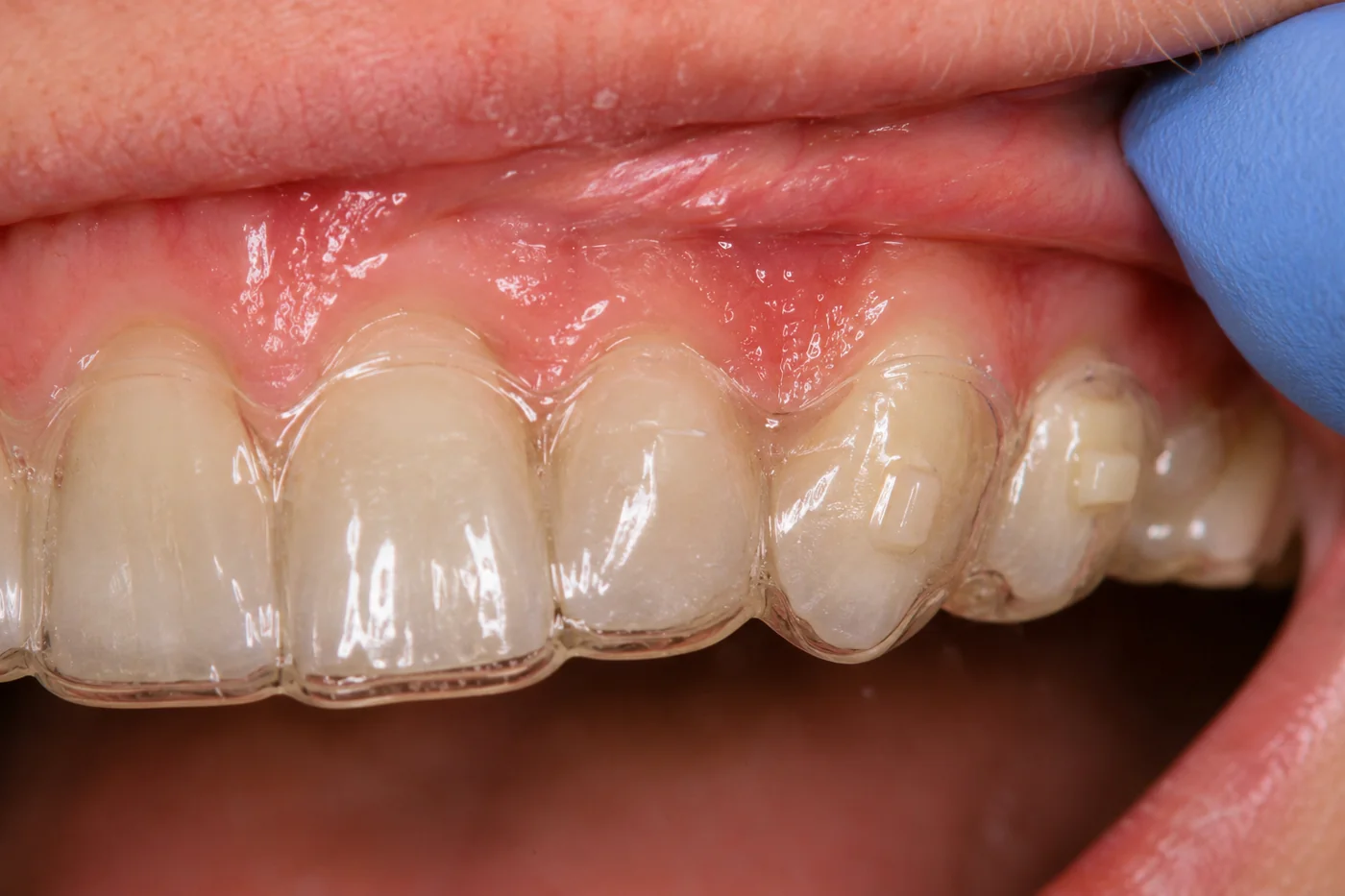
Crowded teeth sometimes need small amounts of space created between them through interproximal reduction, or IPR. Small tooth-colored composite attachments may also be bonded to selected teeth to help the aligners guide movement. The attachments are removed at the end of treatment. Our clear aligner guide illustrates both steps.
Living with aligners
Aligners are worn for most of the day and removed for meals and drinks other than plain water. Clean teeth and clean trays help keep plaque from being trapped against the enamel. Carrying the case makes it easier to store them safely during meals. Consistent wear matters: a tray that no longer fits properly can interrupt the planned sequence.
Keeping the result
Teeth can shift after orthodontic treatment, so retainers are part of the long-term plan. Their job is to hold the new positions after active movement ends. We explain the prescribed schedule and check the fit over time. If an aligner or retainer stops seating fully, it needs assessment rather than being forced into place.