
At the center of every tooth is the pulp, which contains nerves and blood vessels. When a cavity or crack reaches that space, bacteria from your mouth can get inside. The pulp can become infected and eventually die. As the nerve stops working, pain or sensitivity may fade, and some people never feel symptoms at all.
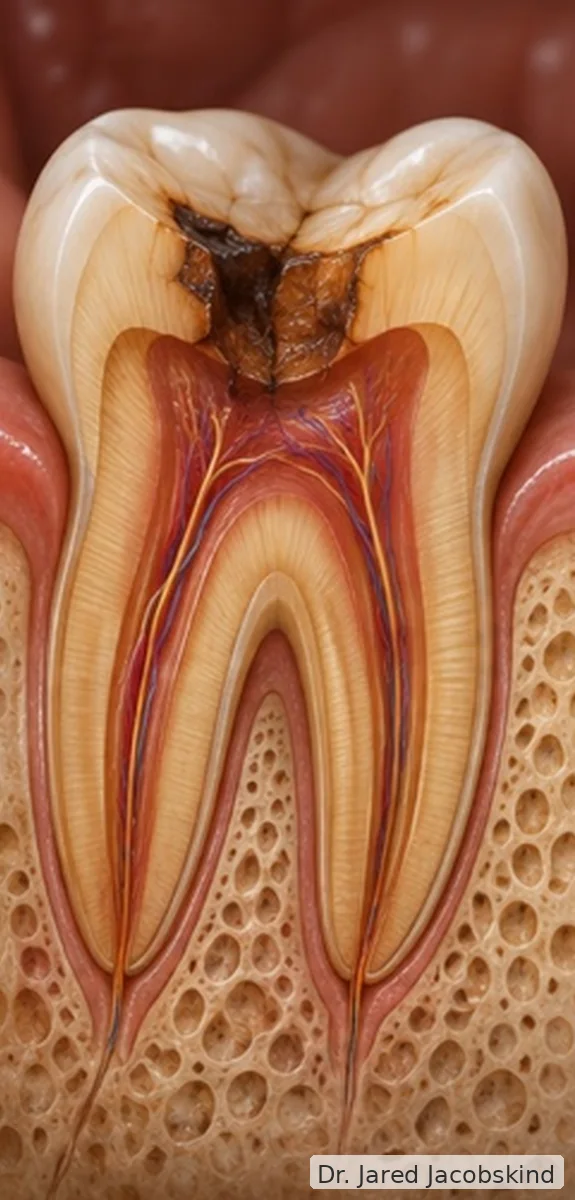
Once bacteria are inside the tooth, they can travel down the narrow channels in its roots. These are the root canals. Each canal has a tiny opening at the tip of the root, where the infection can spread into the surrounding bone.
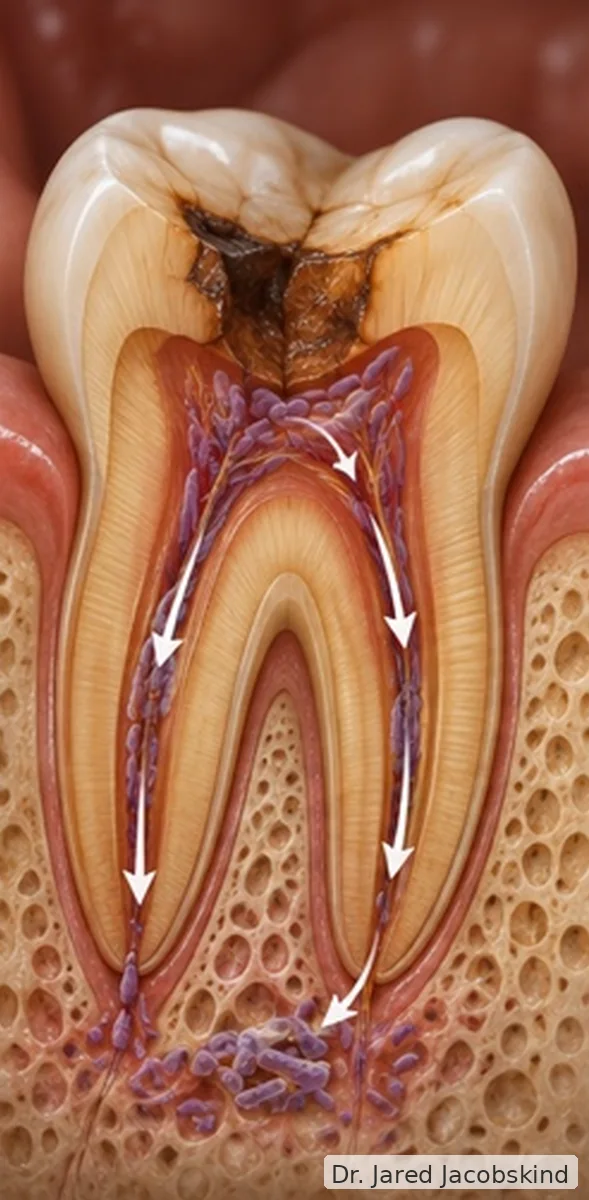
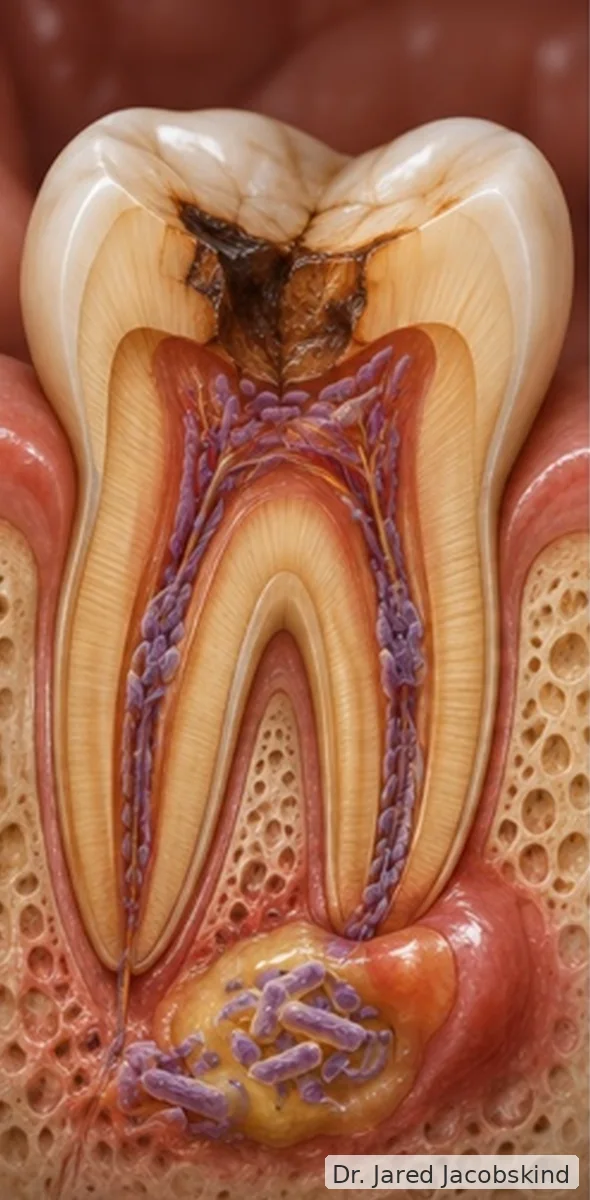
As bacteria multiply around the root tip, a pocket of pus called an abscess can form. Pressure and inflammation in the surrounding tissues can make the area swell or make it hurt to bite down. Even after the nerve inside the tooth dies, the bone and gums around it can still feel pain.
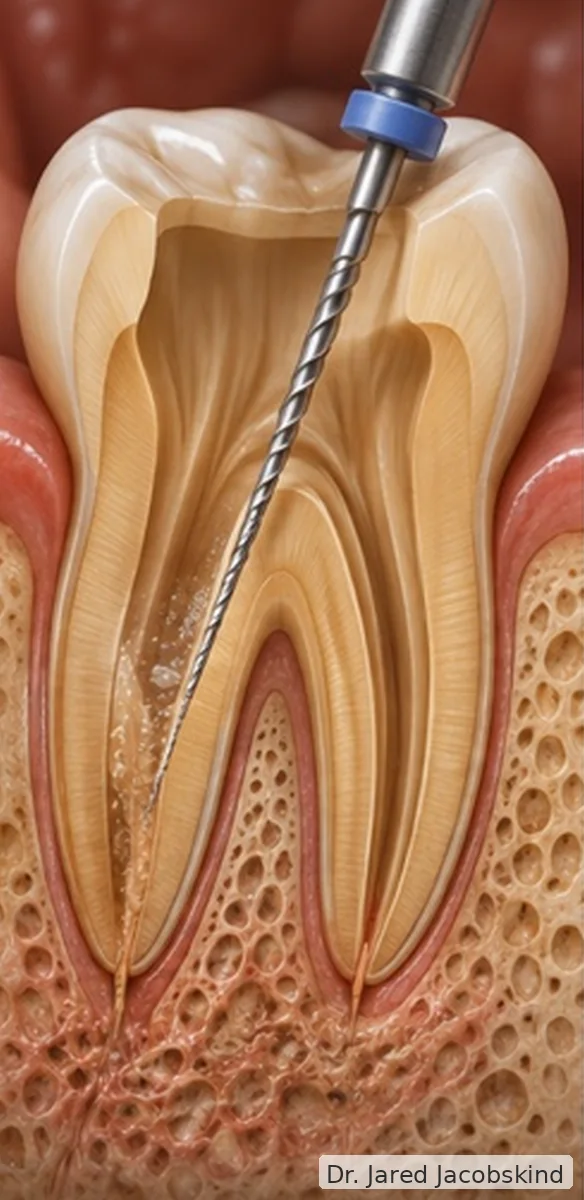
Root canal treatment can clear the infection and help save the tooth. During the procedure, the dentist removes decay and damaged pulp tissue, then uses thin files to clean and shape the canals. A disinfecting rinse helps remove debris and reduce bacteria in areas the files can’t reach.
Once the canals are clean, the dentist fills them with a rubber-like material called gutta percha. A sealer helps close the small gaps around the gutta percha so bacteria are less likely to get back into the canals.
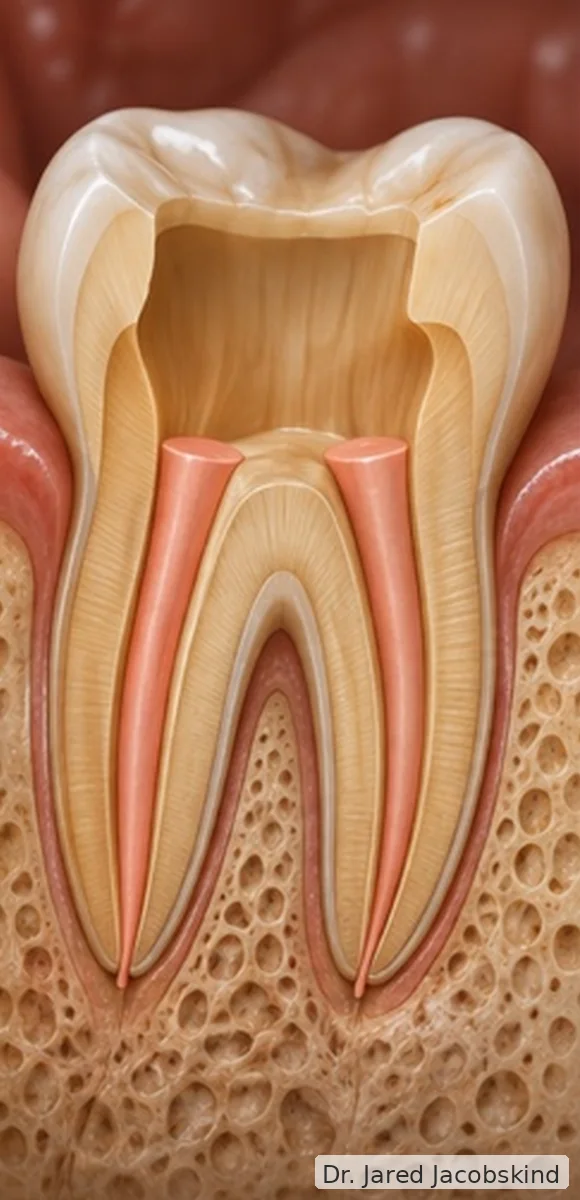
A filling seals the opening at the top of the tooth. By this point, the tooth may have lost a fair amount of structure to decay, a crack, an old filling, or the opening needed to reach the canals. That can leave it more likely to break under chewing pressure. A crown often helps protect the remaining tooth, especially on back teeth. We’ll look at how much healthy tooth remains and talk through the best way to restore it.
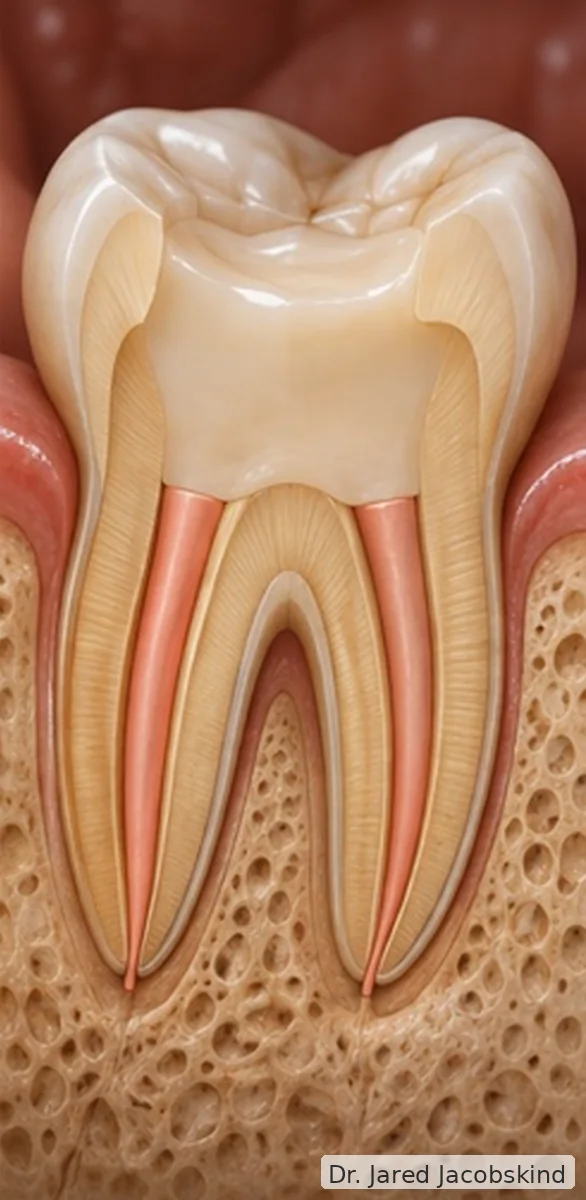
These illustrations explain general concepts and do not replace an individual dental evaluation.