
When several teeth in a row are missing, an implant bridge can fill the gap without reshaping the healthy teeth next to it. In the example shown here, two threaded titanium posts, called implant fixtures, are placed in the jawbone at either end of the gap. The bone needs time to grow around and bond to the implants. That often takes about four months, and sometimes longer.
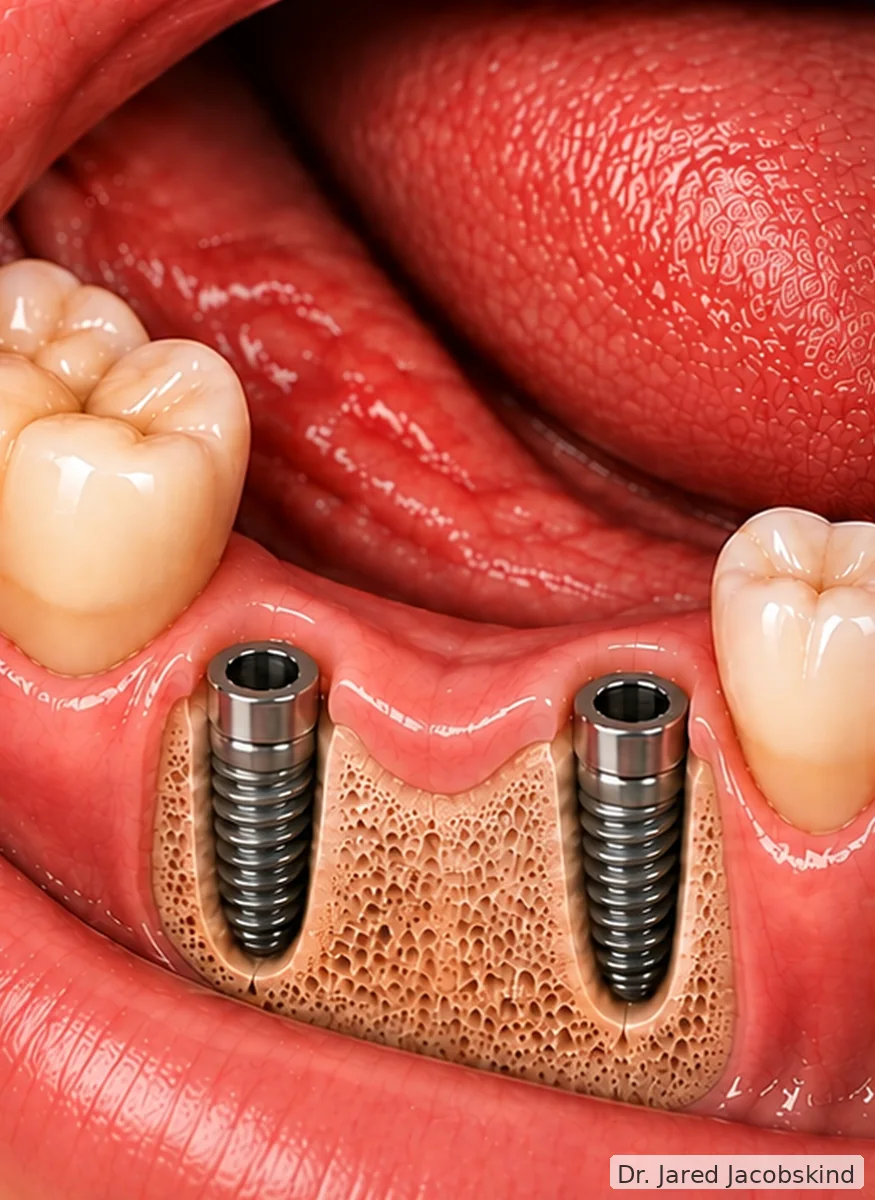
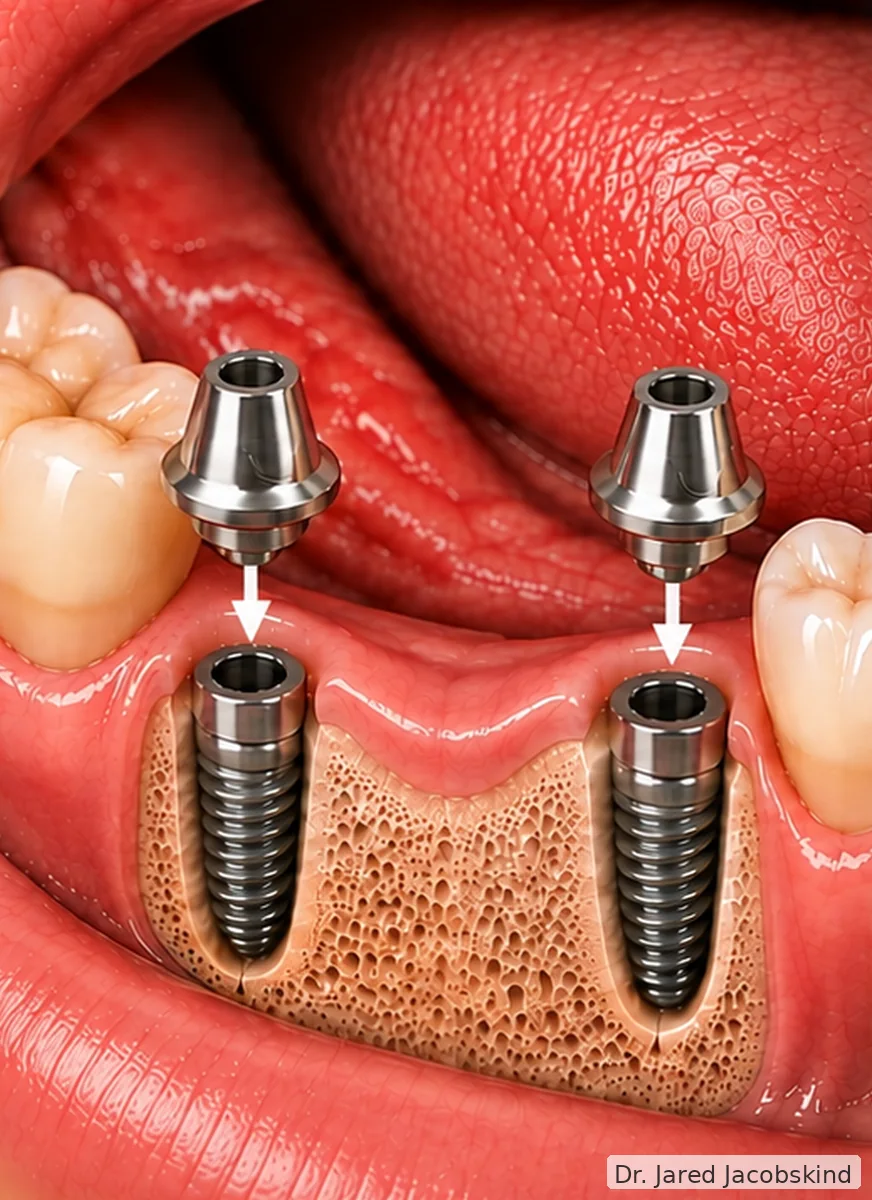
Once the implants have bonded to the bone and are ready to support the bridge, a small connector called an abutment is secured to each implant. The abutments extend above the gumline and give the bridge a stable place to sit.
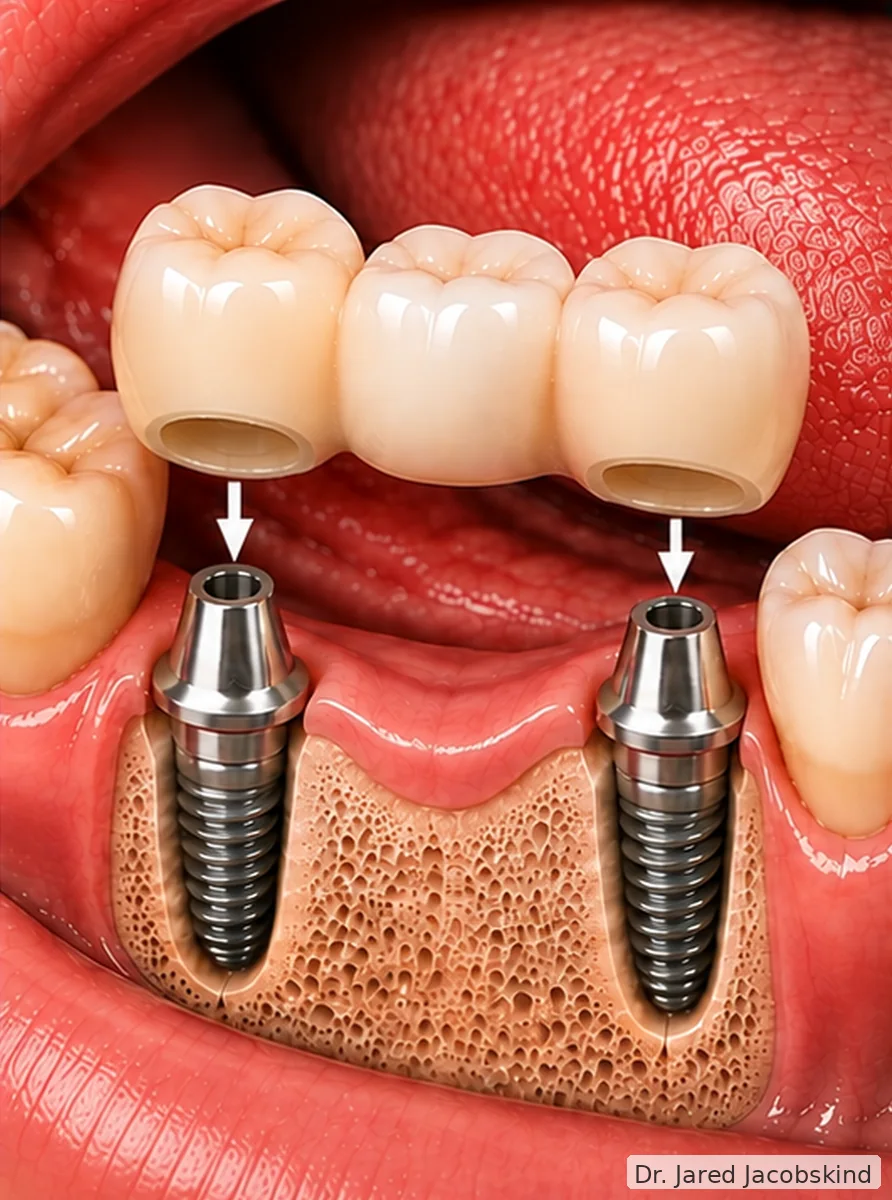
Like a traditional dental bridge, the bridge shown here looks like three separate teeth, but it’s made as one piece. The middle tooth spans the gap. The two ends are hollow and shaped to fit precisely over the abutments.
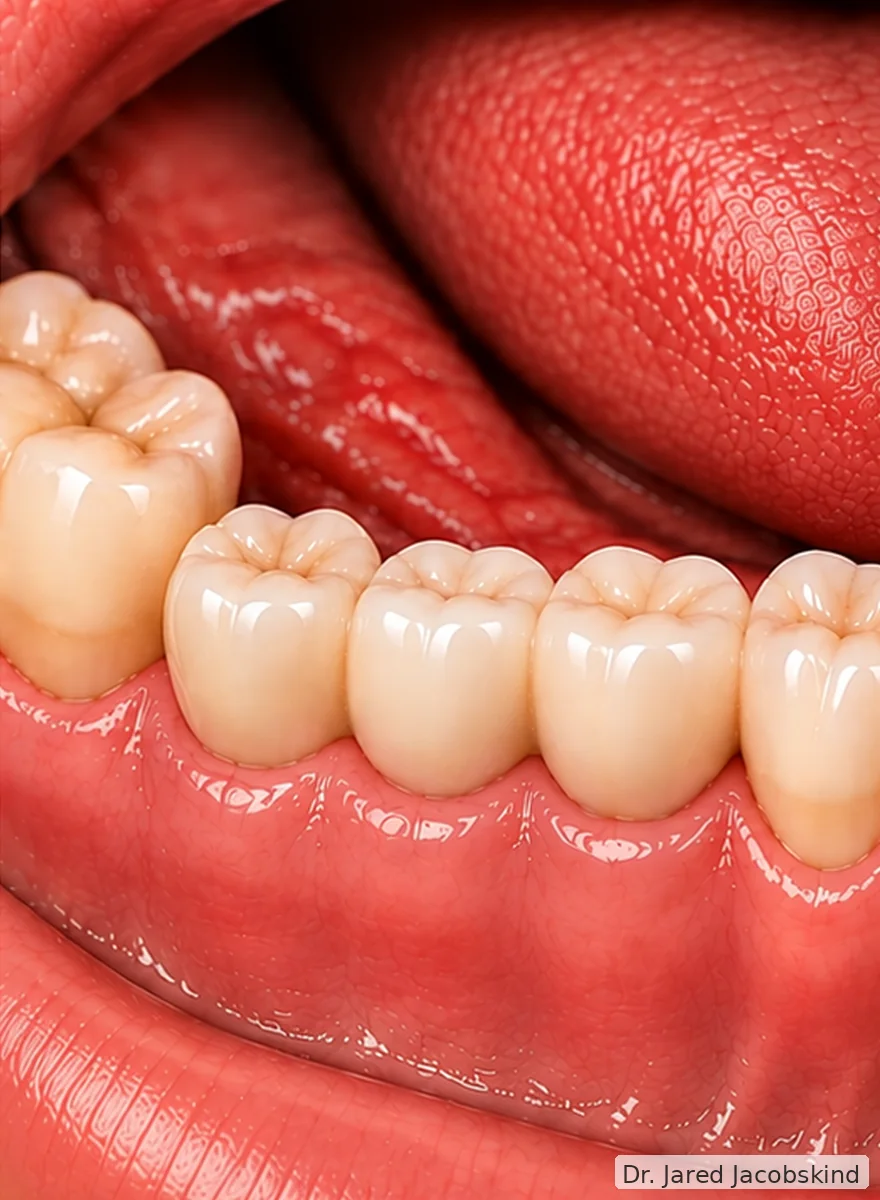
Once the bridge is seated and secured, the hardware is hidden beneath it. What you see when you smile is a row of teeth shaped to blend in with your own. The bridge also gives you back a chewing surface where the teeth were missing. We’ll show you how to clean underneath the bridge and around the implants.
These illustrations explain general concepts and do not replace an individual dental evaluation.