
The muscles of our jaws can produce tremendous force, particularly on the back teeth that do most of our chewing. Over time, that pressure can cause a tooth to develop cracks. Teeth with large fillings or decay may be especially vulnerable because they have less sound structure to absorb the force. Missing teeth can also change how biting forces are distributed, putting more stress on the teeth that remain. What concerns us most about a crack is its unpredictability: some remain stable for years, while others deepen or suddenly fracture.
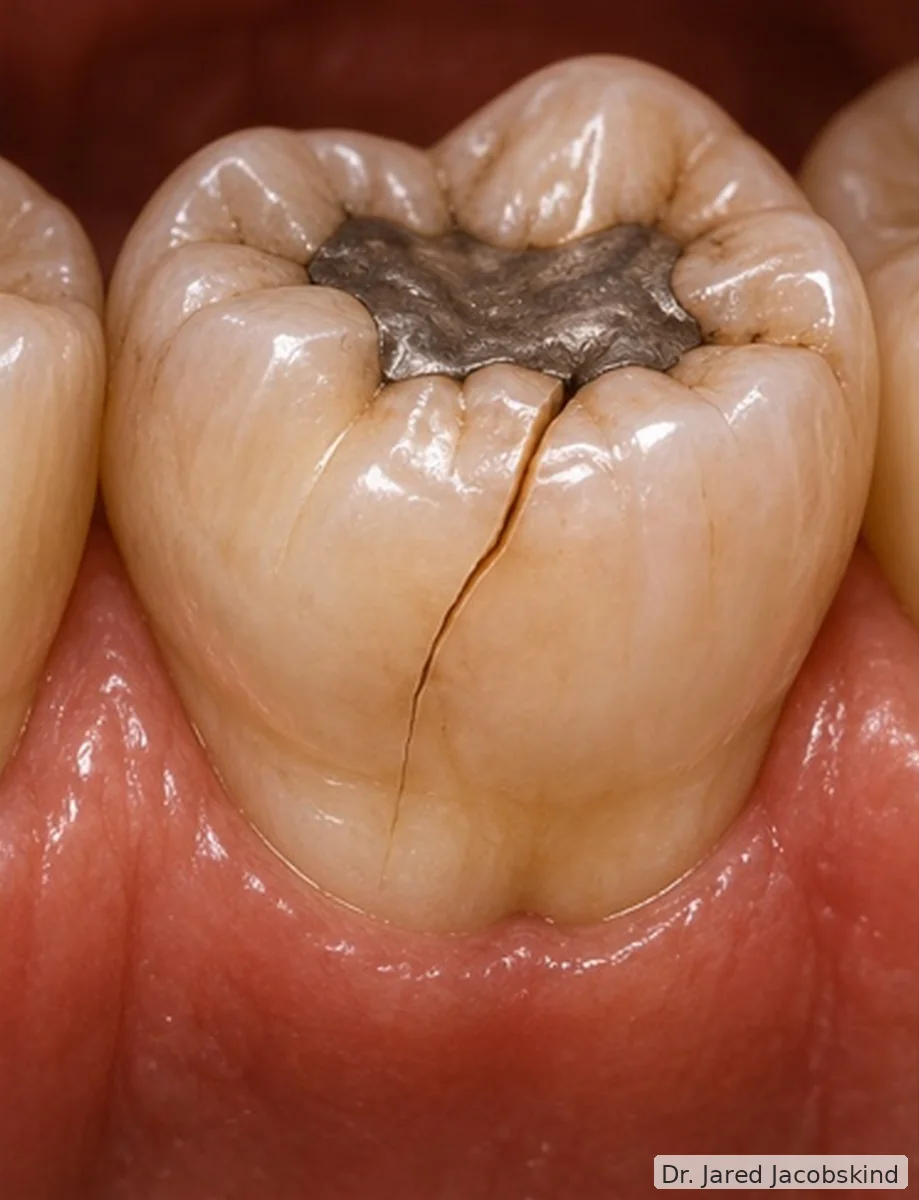
If a cracked tooth breaks, the best-case scenario is a fracture that remains relatively shallow. The damaged portion stays above the gumline and does not extend into the nerve tissue, or pulp, in the middle of the tooth. Provided enough healthy structure remains, we can often repair and protect the tooth with a crown. The crown covers the weakened tooth, restoring its shape and helping distribute chewing forces more evenly.
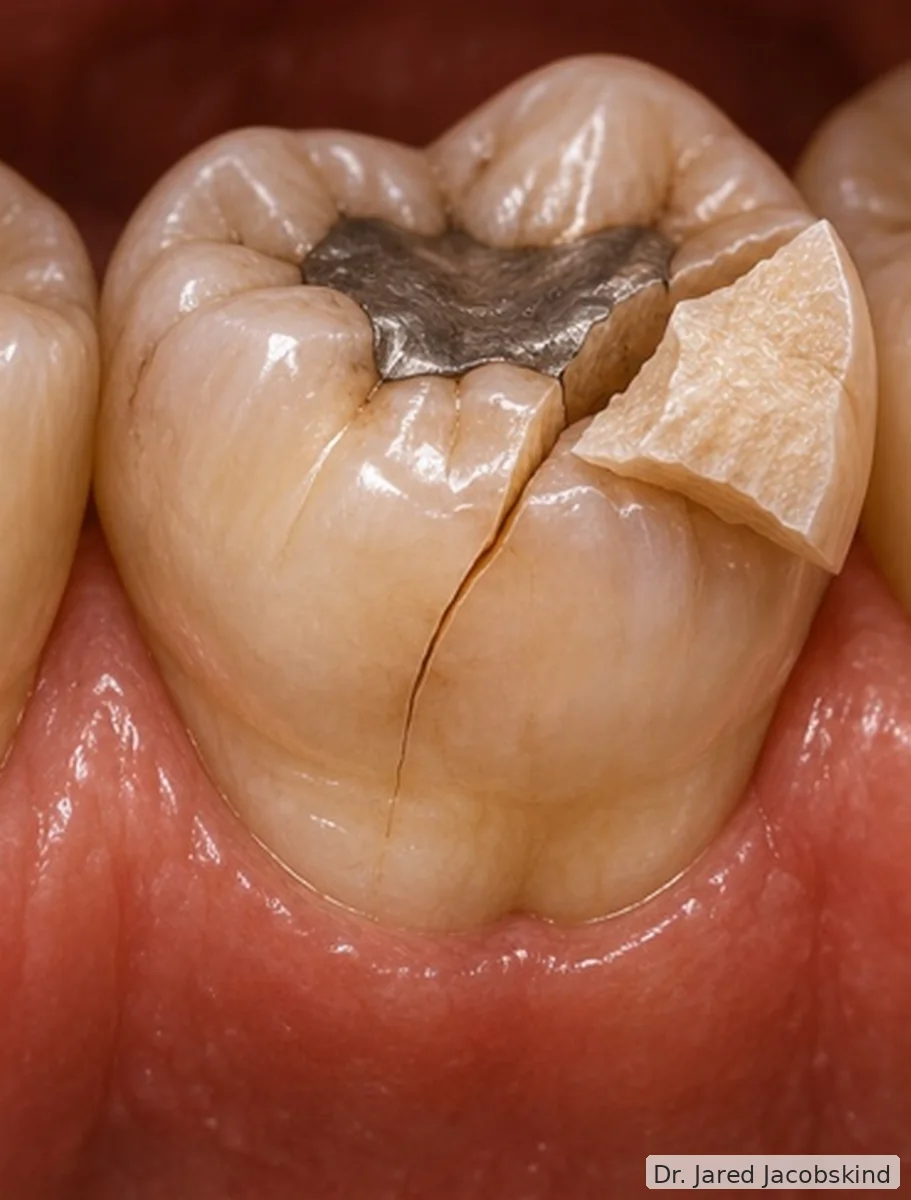
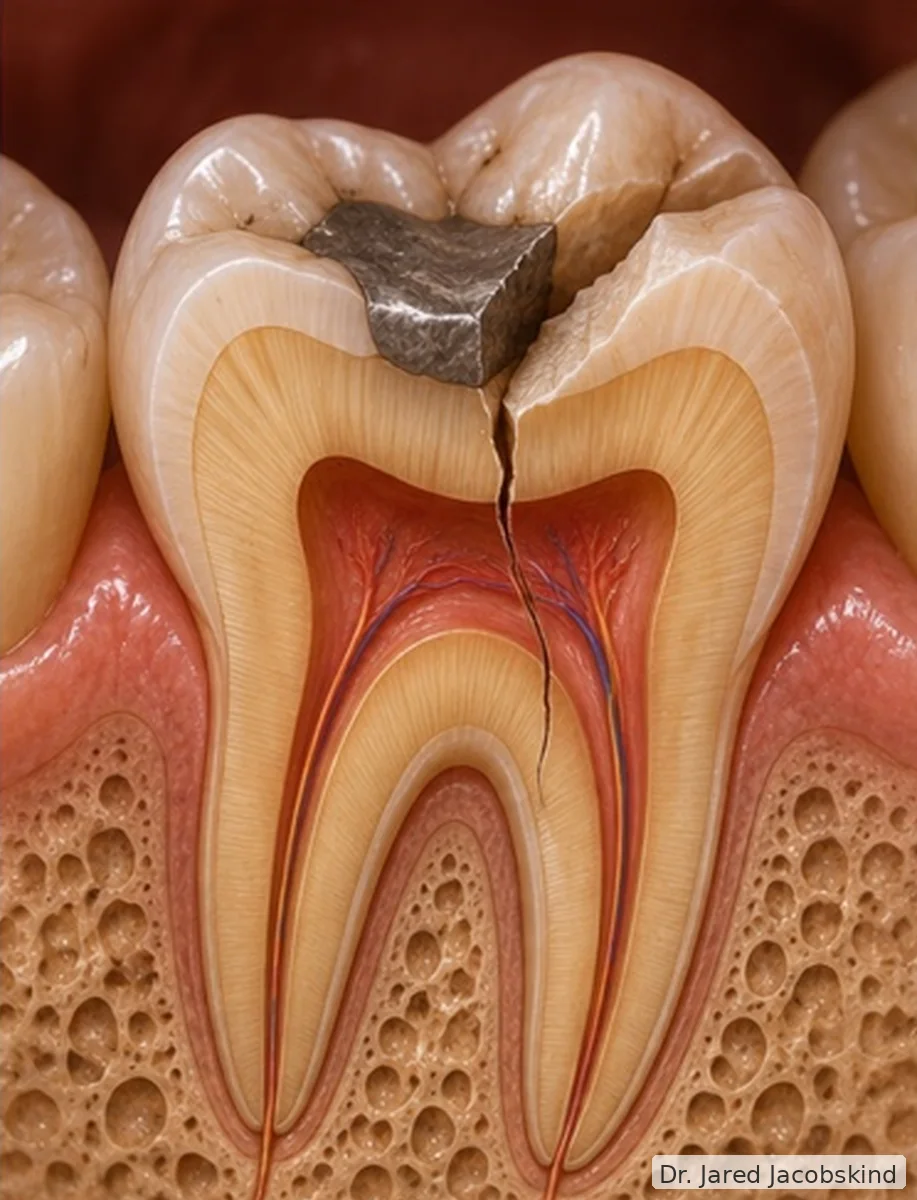
Sometimes the fracture travels farther into the tooth and affects the pulp. This can lead to persistent sensitivity, pain, or infection. Depending on the location and extent of the crack, the tooth may still be saved, but it often needs root canal treatment in addition to a crown. During a root canal, the damaged or infected pulp tissue is removed and the inside of the tooth is cleaned and sealed. A crown then helps protect the remaining structure. We coordinate root canal treatment with an endodontic specialist when needed.
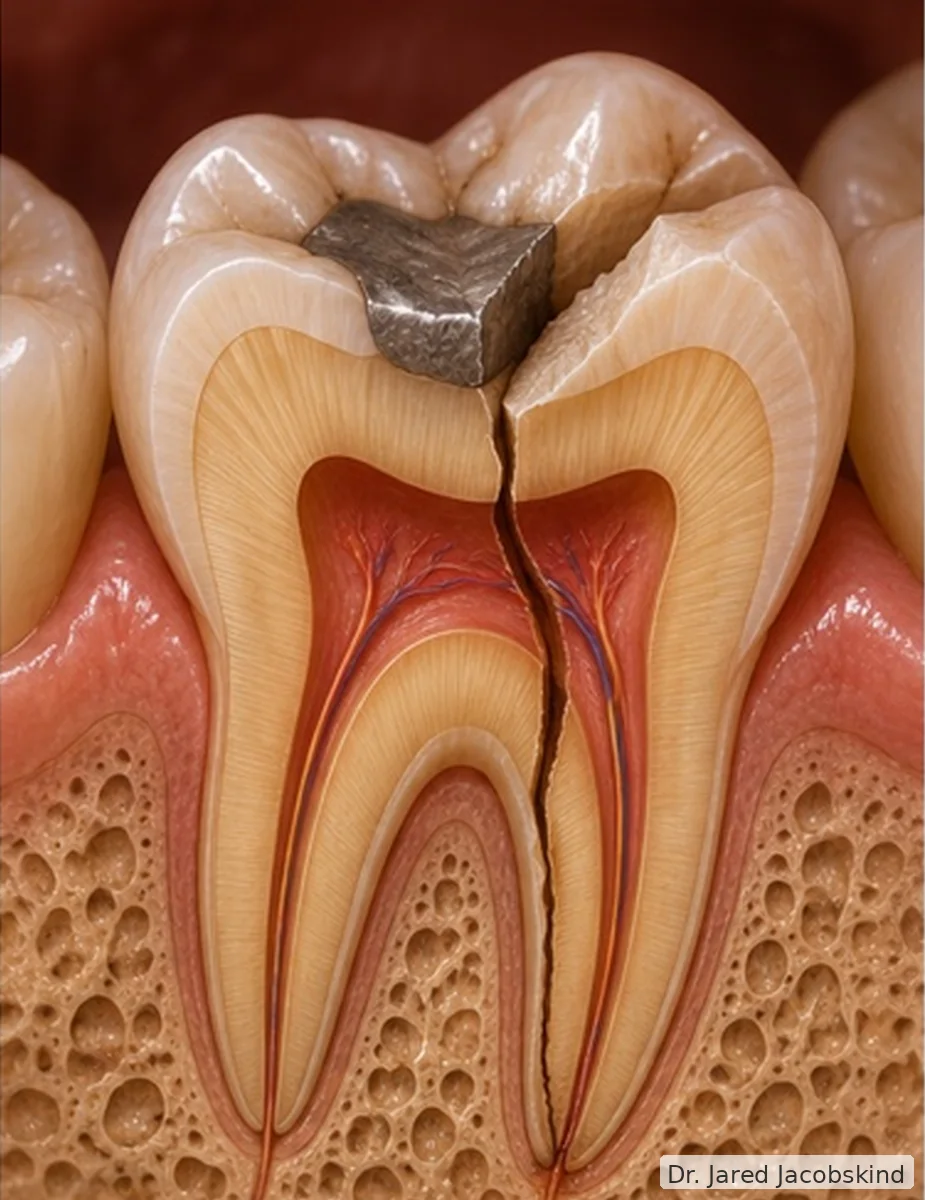
The most serious outcome occurs when a crack extends vertically through the root. A tooth with a true vertical root fracture generally cannot be restored predictably, because the split extends into the part of the tooth anchored in the bone. In most cases, extraction is necessary. This is the outcome we work especially hard to avoid when we identify a concerning crack before the tooth breaks.
Because we cannot reliably predict which cracks will progress, we take concerning cracks seriously—even when a tooth is not painful. A crown can help stabilize a weakened tooth and reduce the stress placed on the crack, lowering the risk of a more serious fracture. It cannot guarantee that a crack will never spread, but protecting a tooth early may prevent the need for more extensive treatment—or the loss of the tooth.
To see how a crown protects a damaged tooth, visit our dental crowns guide. We also offer CEREC same-day crowns in our office for appropriate cases.
Not every visible line is a structural crack. An examination and appropriate imaging help determine the type and extent of damage, although some cracks are difficult to detect fully before treatment. The best treatment depends on the individual tooth and fracture.