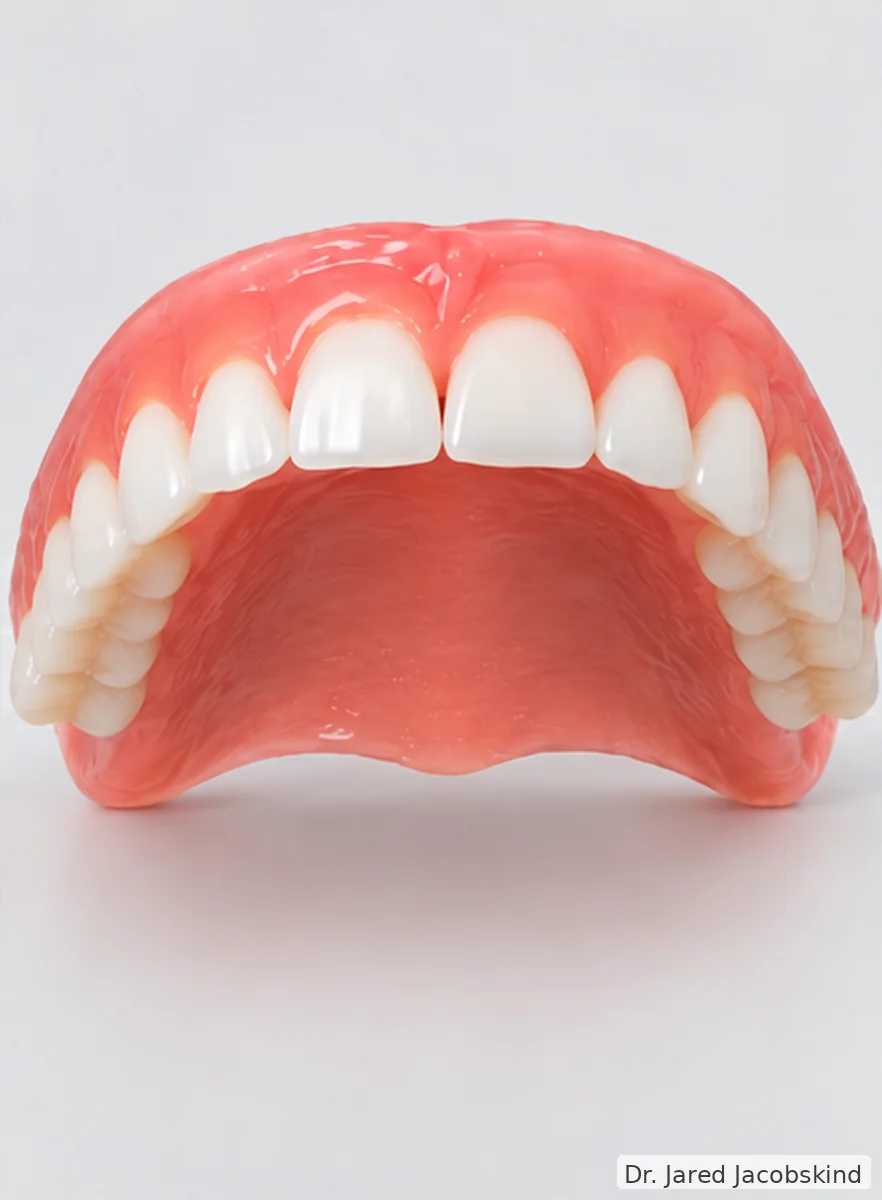
Losing all the teeth in an upper or lower jaw can change how you chew and speak, as well as the support for your lips and cheeks. A complete denture replaces the full row of teeth. It helps you eat and speak more comfortably and restores the appearance and shape of your smile.
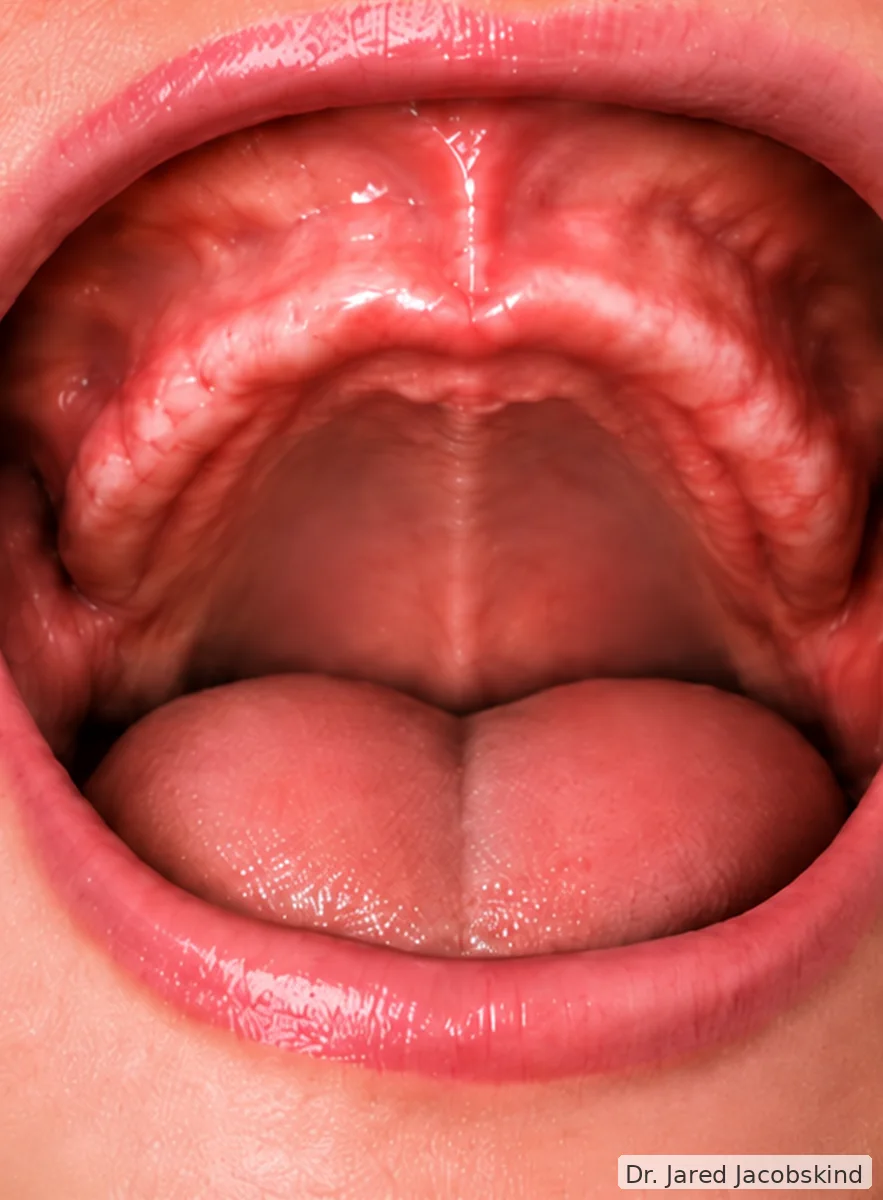
The base of a denture is custom-shaped to fit against the tissues in your mouth. An upper denture usually covers the roof of the mouth, which provides a broad area of support and helps it stay in place. A lower denture curves around the tongue and rests on the ridge of gum tissue beneath it.
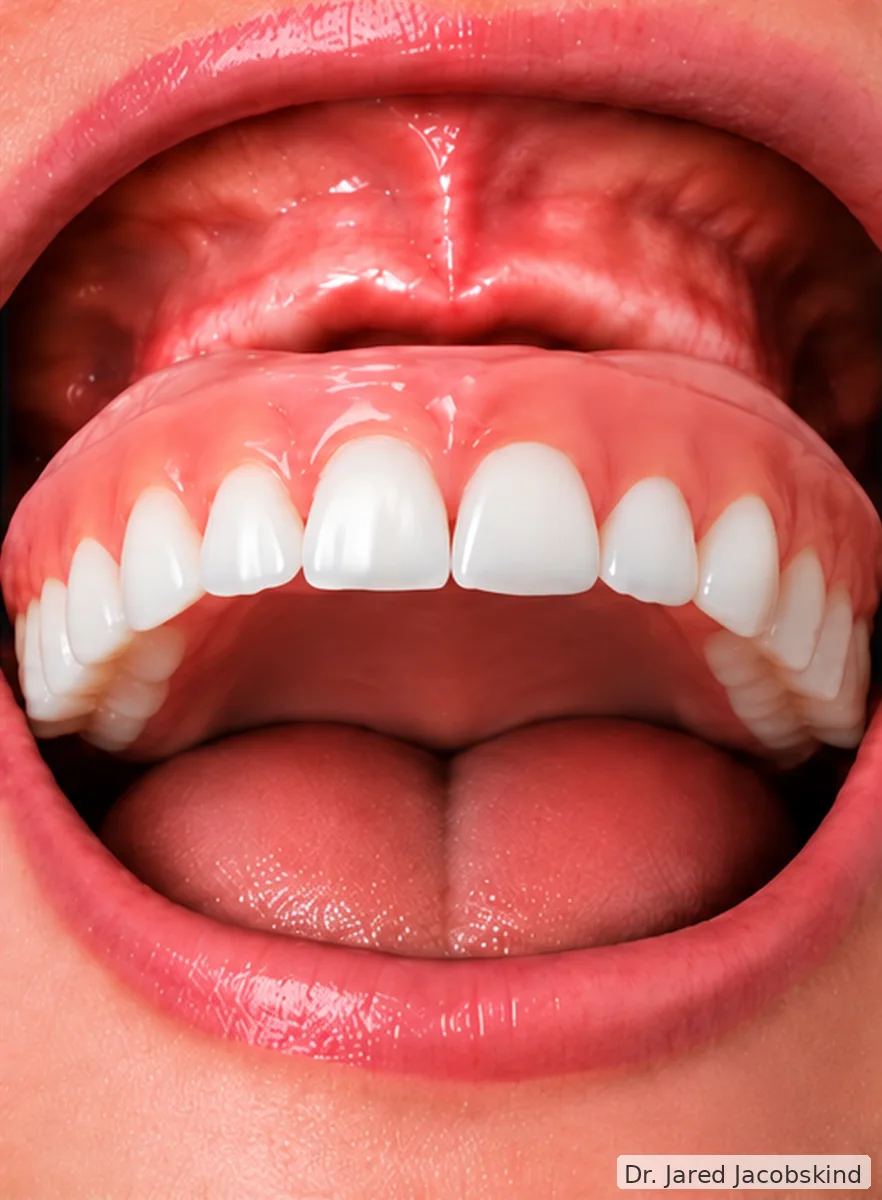
The closer the underside of the denture fits your gums, the better it can stay in place. A well-fitting upper denture can form a seal that creates suction. Lower dentures have less surface area to grip and must make room for the tongue, so they’re often harder to keep steady. Retention varies from person to person because of differences in the shape of the gums and jaw. A denture adhesive can add some extra hold when needed. If the fit changes or the denture keeps moving, we’ll check whether it needs an adjustment.
The finished denture carries a full row of teeth arranged to suit your smile and bite. Speaking and eating with it can take practice while your tongue and cheek muscles get used to it. Your gums and jawbone also change over time, which can make the denture feel loose. Adjustments or a reline, which reshapes the underside to fit your gums again, can help restore the fit.
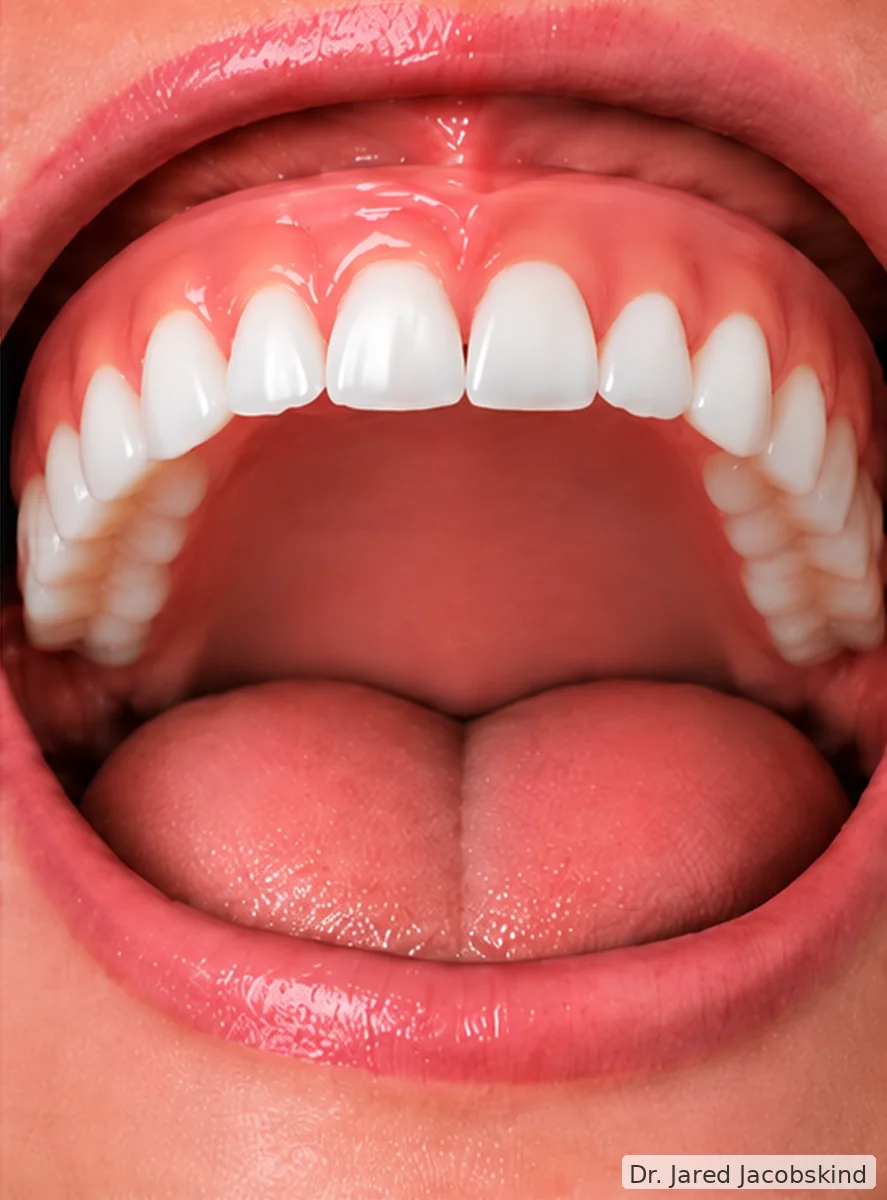
If healthy teeth remain, a partial denture can use them for support. With no teeth remaining, an implant overdenture offers greater hold while staying removable, while All-on-X stays secured to implants at home.
These illustrations explain general concepts and do not replace an individual dental evaluation. Implant surgery and root canal treatment are coordinated with outside specialists.