
Our teeth have surfaces where food and sugars can collect. The tiny grooves and pits on chewing surfaces are especially good at trapping food. Sugars and other carbohydrates can become trapped in these narrow spaces, sometimes remaining there even after we finish eating.
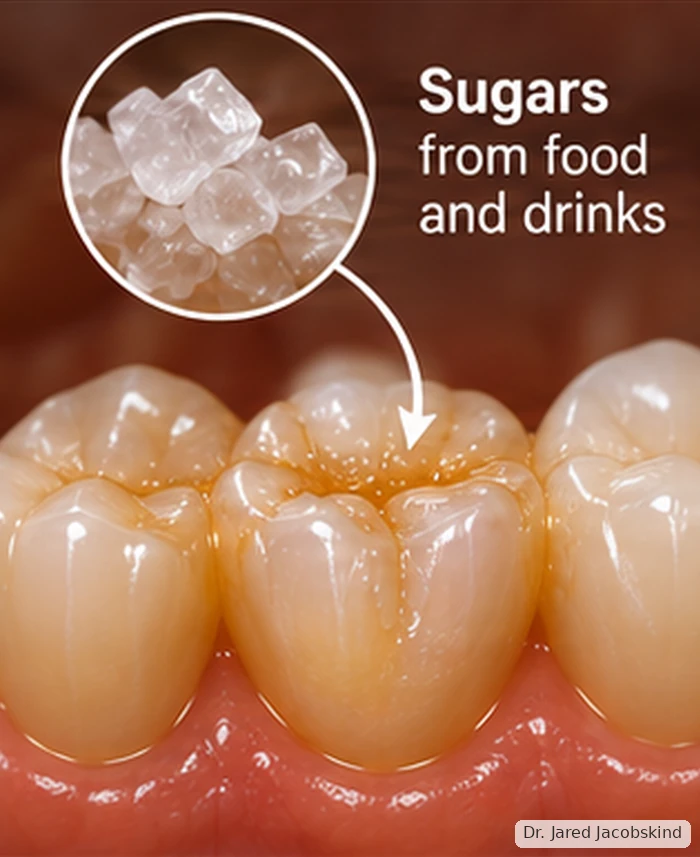
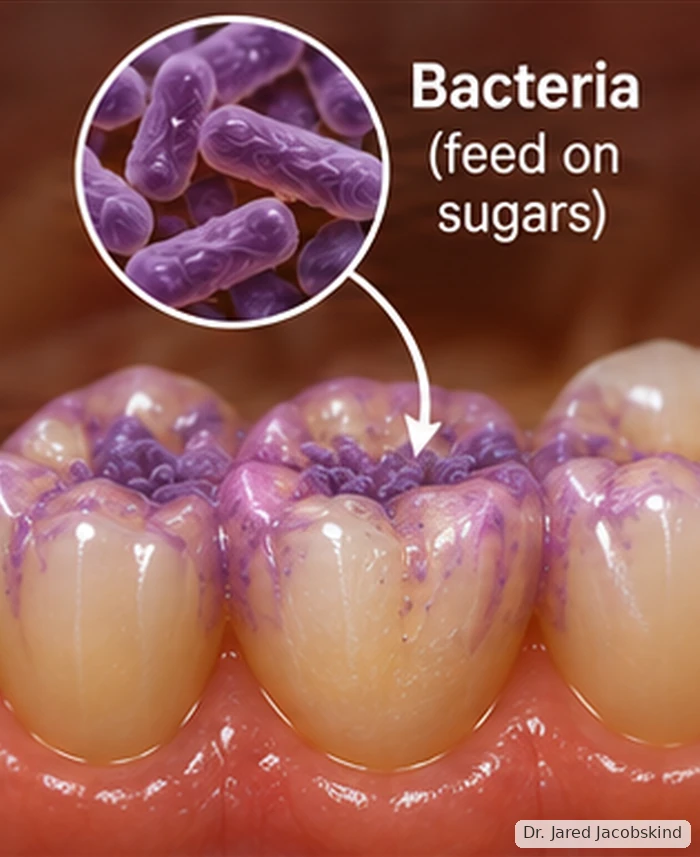
Our mouths naturally contain bacteria, including types that use these sugars for energy. When food collects in a groove, the bacteria living in dental plaque have a ready supply of nutrients. That makes the area especially vulnerable to tooth decay.
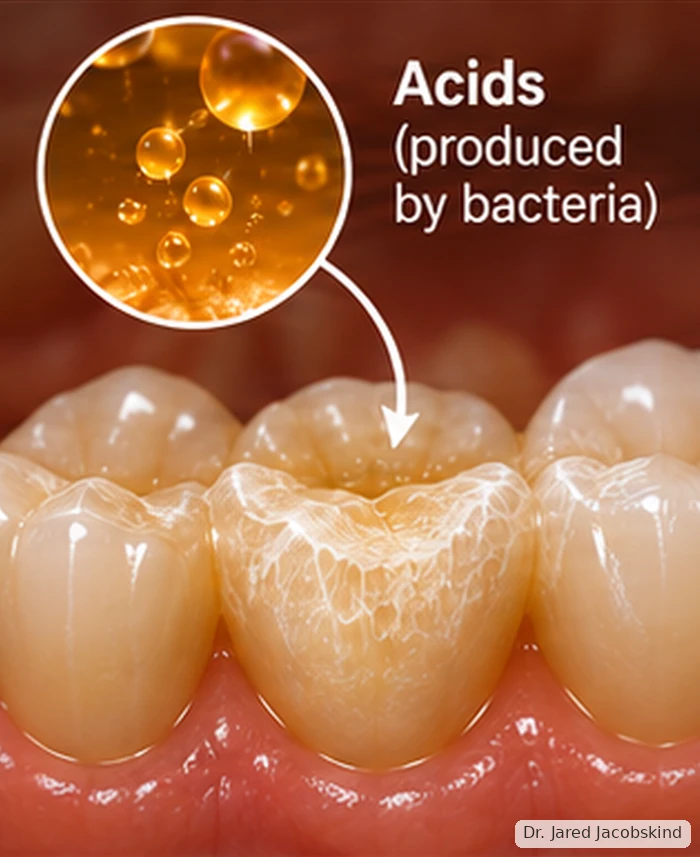
As bacteria break down sugars, they release acid. This acid can dissolve minerals from the enamel—the hard outer layer of a tooth. A single exposure does not automatically create a cavity, but repeated acid attacks, especially with frequent snacking or sugary drinks, can gradually weaken the surface.
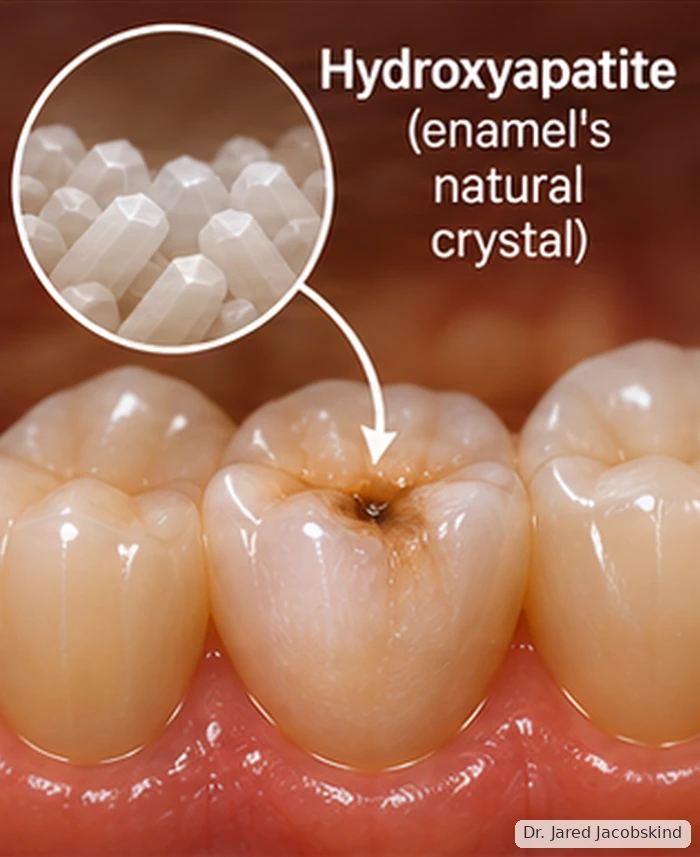
Enamel is made largely of tightly packed mineral crystals called hydroxyapatite. During an acid attack, these crystals lose calcium and phosphate in a process called demineralization. Saliva can often help replenish those minerals when the damage is still early. But if mineral loss continues, the enamel may eventually break down into a physical hole: a cavity that generally cannot repair itself.
So how can we make enamel better able to withstand these attacks? One of our most useful preventive tools is fluoride. Fluoride reaches the teeth through products such as fluoride toothpaste, mouth rinses, and professional fluoride applications.
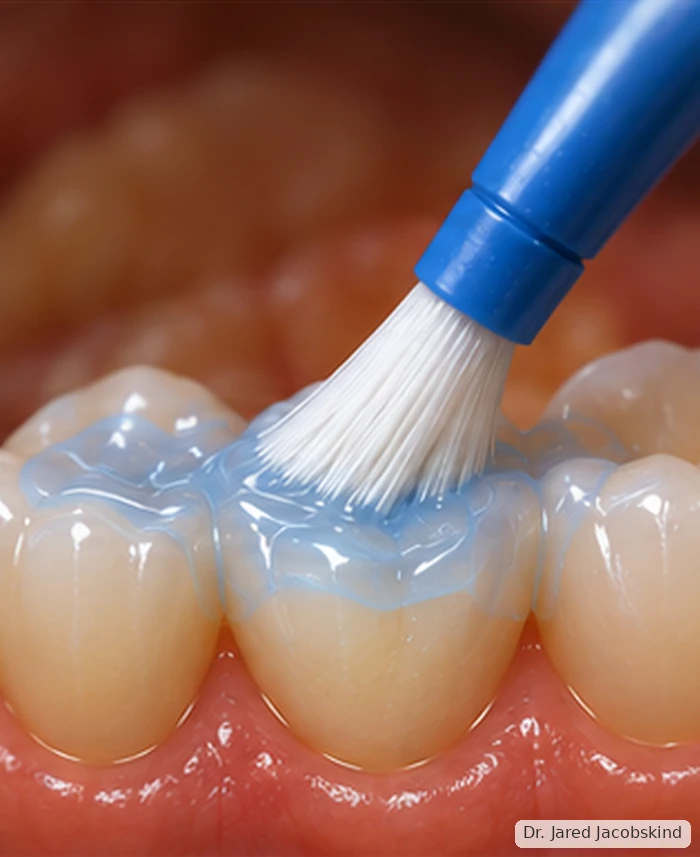
When fluoride is present, it helps lost minerals return to early weakened areas of enamel. Some fluoride becomes incorporated into the mineral surface, forming fluoridated apatite that is more resistant to acid than the original hydroxyapatite. This is often described as forming fluorapatite. The important point is that fluoride strengthens the mineral structure of the enamel; it does not simply coat the tooth like paint.
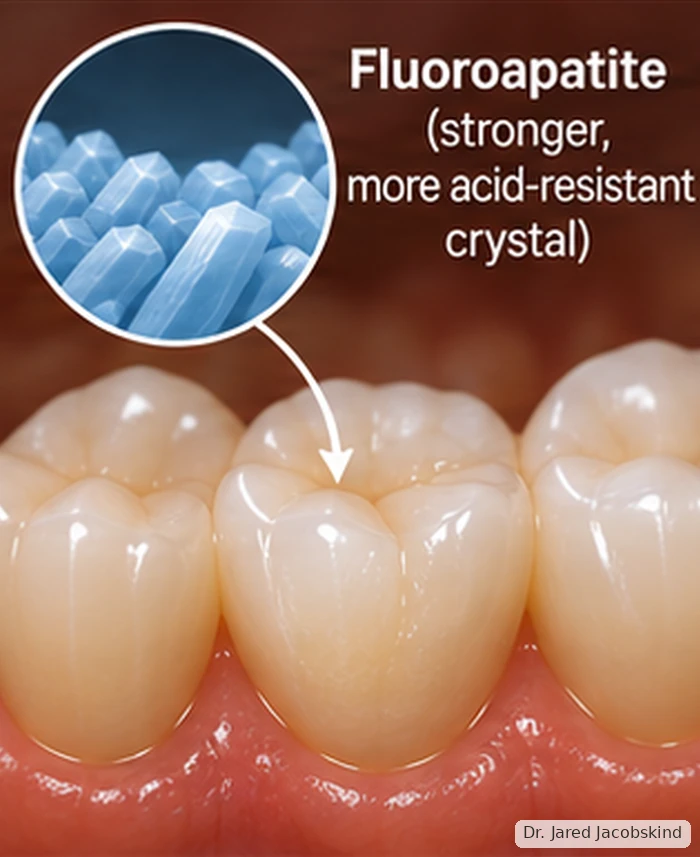
Because this fluoridated mineral is less easily dissolved by acid, enamel is better equipped to handle everyday acid challenges. Fluoride can help slow or reverse very early mineral loss, but it is not a guarantee against future cavities—and it cannot refill an established hole in a tooth. Brushing twice daily with fluoride toothpaste, cleaning between your teeth, limiting frequent sugar exposure, and keeping up with dental examinations all work together to protect your smile.
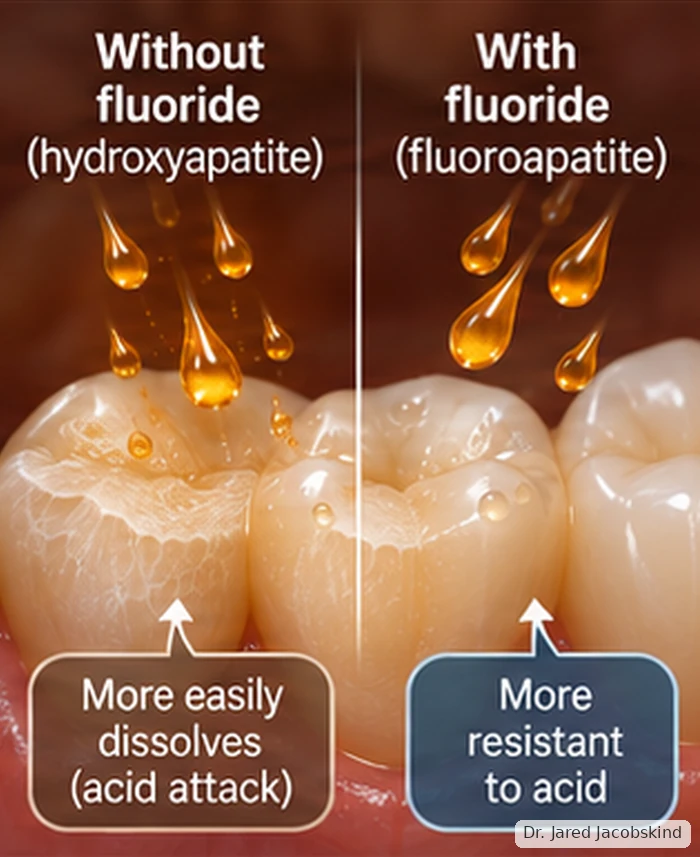
These illustrations are simplified to explain the process. Your dentist can evaluate whether early decay can be managed preventively or requires treatment.